 |
.
 .
. 
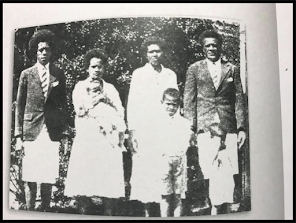
Although the Fijians were initially recruited to provideAlthough the Fijians were initially recruited to provide instruction to the Aboriginal people in the basics of agriculture, they also demonstrated their versatility, functioning in a range of jobs such as "builders, captains of mission vessels, Sunday school teachers, choir masters, evangelists, pastors, and 'protectors' of Aboriginal people" (Kadiba, 1998:107).
Paula, a lay missionary, along with others was involved in teaching the Aborigines how to utilise the land and resources for sustainability, including how to cultivate crops and vegetables. The Fijians served as a bridge between the aboriginals and the Caucasion missionaries. In his thesis, "The Methodist Mission and the emerging Aboriginal Church in Arnhem Land 1916-1977," Kadiba notes that "when their white missionary counterparts were on furlough or on sick leave, the Fijian missionaries single-handedly took responsibility for looking after the mission establishments" and were "valuable assets" during the war years. MOM records and other writings often expressed praise for the Fijian missionaries and noted that they were respected by the Aboriginals.
Waqa had the great privilege to visit the island of Millingimbi many years after his great-grandfather’s arrival. In 2019, he along with his father and family members visited for the first time.


Information taken primarily from pages 103-109: Kadiba, John. "The Methodist Mission and the emerging Aboriginal Church in Arnhem Land 1916-1977." Thesis submitted for Doctor of Philosophy through the Faculty of Education, Northern Territory University, 1998.
Paula, a lay missionary, along with others was involved in teaching the Aborigines how to utilise the land and resources for sustainability, including how to cultivate crops and vegetables. The Fijians served as a bridge between the aboriginals and the Caucasion missionaries. In his thesis, "The Methodist Mission and the emerging Aboriginal Church in Arnhem Land 1916-1977," Kadiba notes that "when their white missionary counterparts were on furlough or on sick leave, the Fijian missionaries single-handedly took responsibility for looking after the mission establishments" and were "valuable assets" during the war years. MOM records and other writings often expressed praise for the Fijian missionaries and noted that they were respected by the Aboriginals.
Waqa had the great privilege to visit the island of Millingimbi many years after his great-grandfather’s arrival. In 2019, he along with his father and family members visited for the first time.
“After learning about my mission heritage, I had total confidence in God’s call to commit my life to mission ministry. My Great Grandfather’s life impacted me and I am glad to be serving in Australia as he was, because of God’s call."
Waqa Barvavilala
Information taken primarily from pages 103-109: Kadiba, John. "The Methodist Mission and the emerging Aboriginal Church in Arnhem Land 1916-1977." Thesis submitted for Doctor of Philosophy through the Faculty of Education, Northern Territory University, 1998.

